How Thick Should a Concrete Driveway Be in Colorado?
A
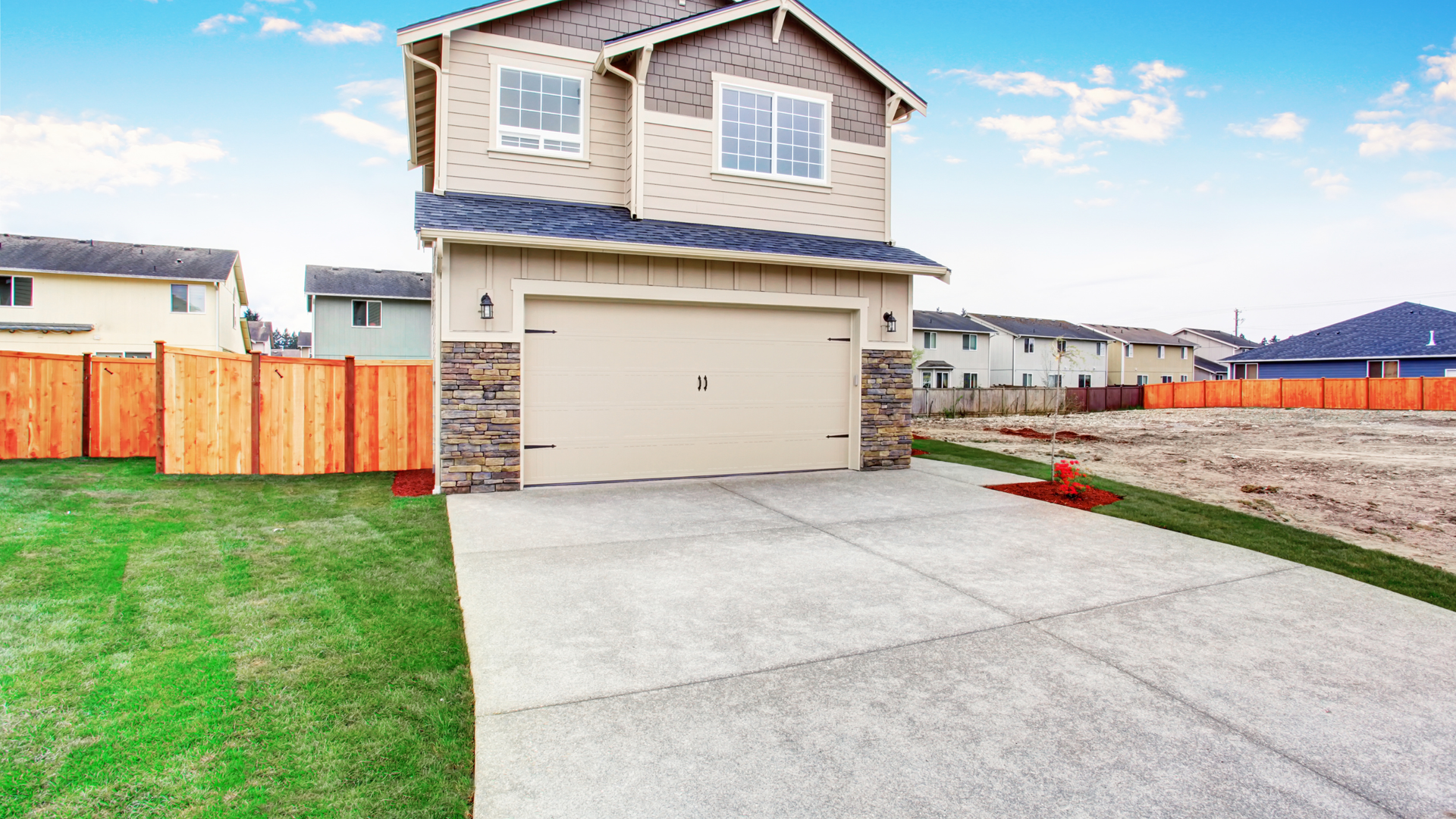
concrete driveway in Colorado usually needs to be at least 4 inches thick for standard residential use. However, that does not mean every driveway should be poured the same way. Vehicle weight, soil conditions, slope, drainage, freeze-thaw exposure, and how the driveway will be used all affect the right slab thickness.
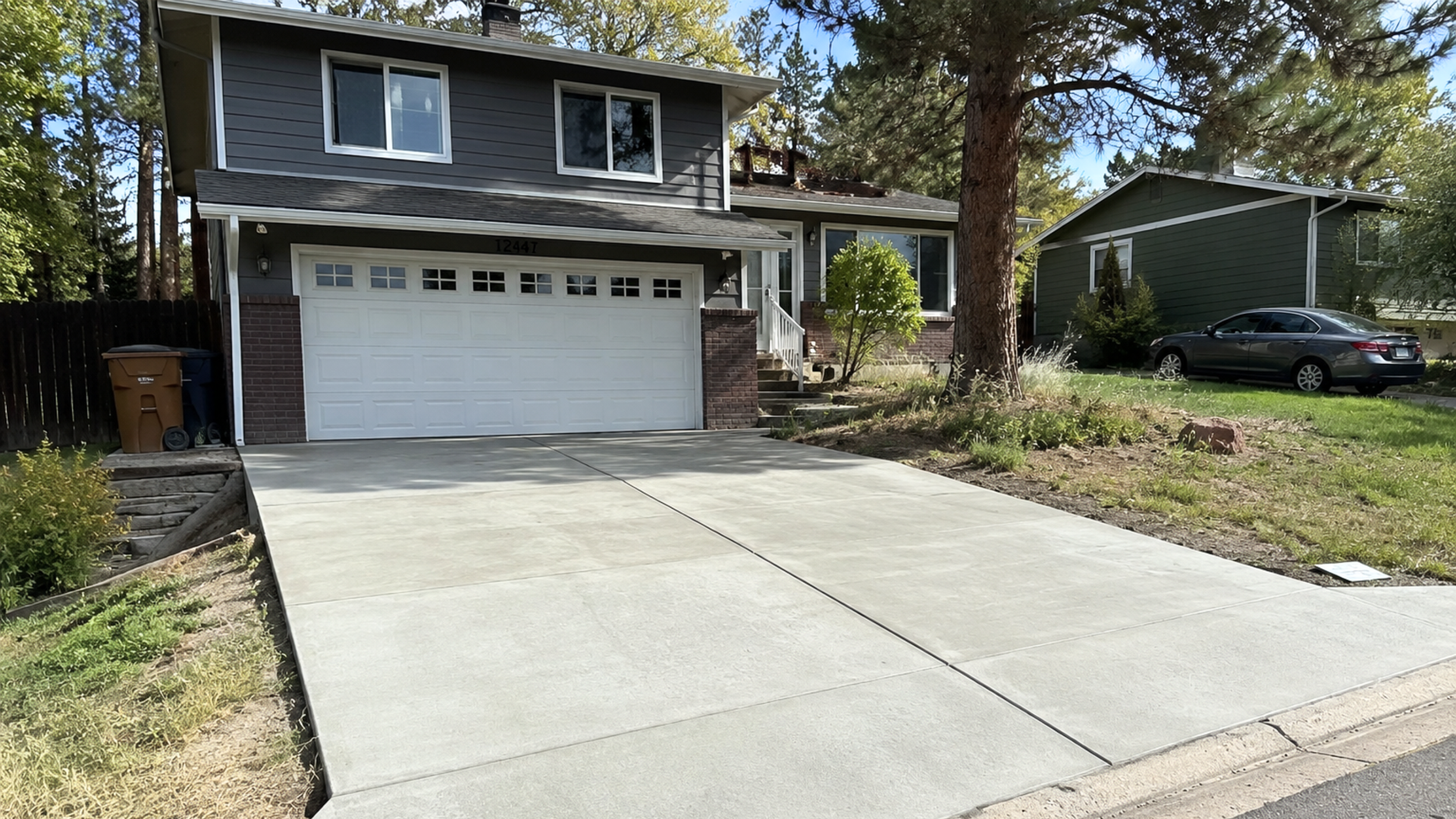
For many homeowners in Jefferson County and surrounding Colorado communities, driveway thickness becomes a serious question when replacing an old cracked driveway, adding RV parking, widening an existing driveway, or planning a new home improvement project.
The short answer is simple: 4 inches is common for regular passenger vehicles, while 5 to 6 inches may be better for heavier use. The better answer is that thickness only works when it is combined with proper base preparation, reinforcement, control joints, drainage, and curing.
That is where many driveway problems begin. A thicker slab poured over a weak base can still crack, settle, or fail early. A properly built driveway is a system, not just a layer of concrete.
Why Driveway Thickness Matters
Driveway thickness affects how well the slab handles weight, movement, weather, and long-term wear. Concrete is strong under compression, but driveways still need the right support underneath to perform well.
In Colorado, driveways deal with several conditions that make proper installation especially important:
- Freeze-thaw cycles
- Snow and ice
- Expansive or shifting soil
- Heavy trucks and SUVs
- Sloped driveways
- Drainage from snowmelt
- UV exposure
- Deicing products
When a driveway is too thin for its use, it is more likely to develop structural cracks, edge breakage, settlement, or surface failure. When the base is not compacted correctly, even a thicker slab can move and crack over time.
For homeowners comparing bids, it is important to ask more than, “How much does the driveway cost?” A better question is, “What thickness, base, reinforcement, and joint layout are included in the estimate?”
Standard Concrete Driveway Thickness
Most residential concrete driveways are poured at about 4 inches thick. This is generally suitable for passenger cars, small SUVs, light pickup trucks, and normal daily parking.
However, a standard 4-inch driveway is not always the right choice for every property.
| Driveway Use | Common Thickness Recommendation |
|---|---|
| Standard passenger vehicles | 4 inches |
| SUVs and light trucks | 4 to 5 inches |
| RV parking or trailers | 5 to 6 inches |
| Heavy trucks or frequent equipment use | 6 inches or more |
| Driveway apron or high-load access area | Often thicker depending on local requirements |
These are general guidelines. A contractor should still look at the site conditions before recommending the final slab thickness.
Is 4 Inches Enough for a Concrete Driveway?
For many homes, yes. A 4-inch concrete driveway can perform well when it is installed over a properly compacted base with good drainage and appropriate joints.
A 4-inch slab is usually enough when:
- The driveway is used for regular cars or small SUVs
- The soil is stable
- The driveway is not extremely steep
- Water drains away properly
- The base is compacted correctly
- Heavy trucks will not park there often
The issue is not just the number. Some homeowners are told they are getting a 4-inch driveway, but the thickness may not be consistent across the entire slab if the base is uneven or poorly prepared.
That is why preparation matters. The driveway should be excavated and graded properly so the slab has a consistent depth and strong support underneath.
When Should a Driveway Be 5 Inches Thick?
A 5-inch driveway may be a smart upgrade when the driveway will carry heavier vehicles or when the homeowner wants additional durability.
This may apply if you regularly park:
- Full-size pickup trucks
- Work vans
- Larger SUVs
- Small trailers
- Boats
- Utility trailers
Increasing thickness can improve load capacity, especially in areas that receive repeated vehicle traffic. This can be useful near the garage entrance, turnaround areas, and parking pads.
A 5-inch slab is not always necessary, but it can be worth discussing when the driveway is expected to handle more than basic residential use.
When Should a Driveway Be 6 Inches Thick?
A 6-inch concrete driveway is usually recommended when the driveway will support heavier loads or more demanding use.
This may include:
- RV parking
- Large trailers
- Commercial trucks
- Dumpsters during construction
- Heavy equipment access
- Steep driveways
- Poor soil conditions
- Long driveways with repeated traffic
If a homeowner plans to park an RV, camper, loaded trailer, or heavy work truck, a thicker slab may help reduce the risk of stress cracking and slab movement.
However, thickness alone is still not enough. A 6-inch driveway should also include proper base depth, compaction, reinforcement where needed, and a good joint plan.

Concrete Thickness vs Base Preparation
One of the biggest mistakes homeowners make is focusing only on the concrete thickness and ignoring the base.
The base is the compacted layer underneath the driveway. It helps distribute weight, support the slab, and reduce movement caused by soil changes.
A well-prepared base helps prevent:
- Settlement
- Low spots
- Cracking
- Water pooling
- Edge failure
- Uneven slabs
In Colorado, base preparation is especially important because soil movement and freeze-thaw conditions can put extra stress on exterior concrete.
A properly prepared driveway base may include:
- Excavation of weak soil
- Grading for drainage
- Compacting the subgrade
- Adding compacted gravel or road base
- Creating consistent slab depth
- Planning for water movement
If the base is soft, uneven, or poorly compacted, the driveway can fail even if the concrete itself is thick.
Does Reinforcement Replace Thickness?
No. Reinforcement does not replace proper thickness. It supports the driveway by helping hold concrete together if cracking occurs, but it does not make a thin slab equal to a properly designed slab.
Common reinforcement options include:
- Rebar
- Wire mesh
- Fiber-reinforced concrete
Reinforcement can be useful for driveways that will carry heavier loads, have larger sections, or are located on challenging sites. However, reinforcement must be placed correctly. Wire mesh sitting at the bottom of the slab does not provide the same value as reinforcement positioned properly within the concrete.
A contractor should explain whether reinforcement is needed and how it will be used.
Why Colorado Weather Affects Driveway Thickness
Colorado weather can be tough on concrete. Driveways are exposed to snow, ice, sun, temperature swings, and freeze-thaw cycles.
Freeze-thaw damage happens when water enters small pores or cracks in the concrete, freezes, expands, and creates pressure. Over time, this can lead to cracking, scaling, or surface wear.
Thickness helps with structural performance, but it does not fully protect against weather damage. The driveway also needs:
- Proper concrete mix
- Correct finishing
- Good drainage
- Control joints
- Adequate curing
- Sealing when appropriate
- Careful winter maintenance
A driveway that holds water is more likely to have problems during winter. This is why drainage and slope should be planned before the concrete is poured.
Driveway Thickness and Control Joints
Control joints are planned cuts or tooled lines that help guide where concrete cracks. Since concrete naturally shrinks as it cures, joints help reduce random cracking.
Even if the driveway is the right thickness, poor joint placement can lead to visible cracks in unwanted areas.
Control joints should be planned based on:
- Slab thickness
- Driveway shape
- Width and length
- Corners and transitions
- Garage entrance
- Walkway connections
- Existing concrete edges
Long, wide, or irregular driveway sections may need additional joint planning.
Homeowners should ask the contractor where control joints will be placed before work begins. This helps avoid surprises after the driveway is finished.
Driveway Aprons May Need Extra Strength
The driveway apron is the section near the street or sidewalk. This area often handles more turning, braking, and concentrated vehicle weight.
Depending on local requirements, driveway aprons may need to be thicker than the main residential driveway. Some municipalities also have specific rules for work near sidewalks, curbs, or public right-of-way areas.
If the driveway connects to a public sidewalk or street, homeowners should ask whether permits, inspections, or specific thickness requirements apply.
This is especially important in established neighborhoods where driveway replacement may involve curb cuts, sidewalk transitions, or city-maintained areas.
How Thickness Affects Concrete Driveway Cost
A thicker driveway usually costs more because it requires more concrete, more labor, and sometimes more base preparation or reinforcement.
However, the lowest price is not always the best value. If a driveway is too thin for the way it will be used, repairs or replacement can cost much more later.
| Thickness | Best For | Cost Impact |
|---|---|---|
| 4 inches | Standard residential driveways | Base price |
| 5 inches | Heavier vehicles and added durability | Moderate increase |
| 6 inches | RVs, trailers, heavy use, poor soil | Higher investment |
| 6+ inches | Commercial or specialty use | Project-specific |
A good estimate should explain what is included, not just provide a total number.
Look for details such as:
- Demolition and removal
- Excavation depth
- Base material
- Compaction
- Concrete thickness
- Reinforcement
- Finish type
- Control joints
- Cleanup
- Warranty
If two estimates are very different, the scope may not be the same.
Common Mistakes Homeowners Make
Choosing the Cheapest Bid Without Comparing Scope
One estimate may include proper excavation, base preparation, reinforcement, and cleanup. Another may only include a basic pour. The cheaper option may not actually be the better deal.
Not Mentioning Heavy Vehicle Use
If you plan to park an RV, trailer, work truck, or boat, tell your contractor before the estimate is prepared. This can affect thickness and reinforcement.
Ignoring Drainage
Standing water is one of the biggest enemies of exterior concrete. Drainage should be part of the driveway plan from the beginning.
Assuming All Concrete Is the Same
Concrete mix, finishing, curing, and installation practices all affect performance. Thickness matters, but it is only one part of the project.
Driving on the Concrete Too Soon
Concrete needs time to gain strength. Driving on it too early can damage the slab before it has properly cured.
How Long Before You Can Drive on a New Concrete Driveway?
Most homeowners should wait at least 7 days before driving regular passenger vehicles on a new concrete driveway. Heavier vehicles may require more time.
Concrete continues gaining strength after the first week, with 28 days commonly used as the standard point for full design strength.
Your contractor should give specific guidance based on weather, mix design, slab thickness, and site conditions.
During the curing period, homeowners should avoid:
- Parking heavy vehicles
- Dragging equipment across the surface
- Placing dumpsters on the driveway
- Using harsh chemicals
- Blocking drainage
Best Thickness for Driveway Extensions and Parking Pads
Driveway extensions and parking pads should be planned based on how they will be used.
A small side extension for occasional parking may only need the same thickness as the existing driveway. An RV pad or trailer parking area may need a thicker slab and stronger base.
Before adding a driveway extension, homeowners should consider:
- Vehicle weight
- Turning radius
- Drainage path
- Slope
- Existing driveway condition
- HOA rules
- Local setback requirements
- Future use
If the new section is tied into old concrete, joint placement and transition details are important.
Concrete Driveway Thickness by Project Type
| Project Type | Suggested Thickness |
|---|---|
| New residential driveway | 4 inches |
| Driveway replacement | 4 to 5 inches |
| Heavy truck parking | 5 to 6 inches |
| RV parking pad | 5 to 6 inches |
| Garage approach | 4 to 6 inches |
| Driveway apron | May require 6 inches or more |
| Commercial access | Project-specific |
These recommendations are general. A professional contractor should evaluate the property before finalizing the scope.
Questions to Ask a Concrete Contractor
Before hiring a contractor, ask questions that help you understand the quality of the installation.
Good questions include:
- How thick will the driveway be?
- How deep will you excavate?
- What base material will you use?
- Will the base be compacted?
- Do I need reinforcement?
- Where will the control joints go?
- How will water drain away from the driveway?
- How long before I can drive on it?
- What finish do you recommend?
- Is cleanup included?
- Is the work backed by a warranty?
A contractor should be able to answer clearly. Vague answers may be a sign that the installation process is not well planned.
What Formtiva Concrete Considers Before Recommending Thickness
For homeowners in Jefferson County and nearby Colorado communities, the right driveway thickness depends on the property. Formtiva Concrete evaluates the project conditions before recommending a slab thickness.
Important factors include:
- Current driveway condition
- Soil and base conditions
- Vehicle use
- Drainage
- Slope
- Garage elevation
- Existing sidewalks or aprons
- Decorative finish goals
- Long-term use
This type of planning helps prevent avoidable problems and gives homeowners a better understanding of what they are paying for.
Final Takeaway: Thickness Matters, But Installation Matters More
So, how thick should a concrete driveway be in Colorado?
For most homes, 4 inches is a common standard. For heavier vehicles, RV parking, trailers, steep driveways, or challenging soil conditions, 5 to 6 inches may be the better choice.
But thickness alone does not guarantee a durable driveway. Long-term performance also depends on proper excavation, compacted base material, drainage, reinforcement, joint placement, finishing, and curing.
If you are planning a new driveway, replacement, extension, or parking pad, Formtiva Concrete can help you choose the right concrete solution for your property.
Contact Formtiva Concrete to schedule a driveway estimate and discuss the best thickness, finish, and installation plan for your home.
FAQs
How thick should a concrete driveway be for cars?
Most residential driveways for regular cars and light SUVs are about 4 inches thick when installed over a properly prepared base.
Is 4 inches of concrete enough for a driveway?
Yes, 4 inches is commonly enough for standard residential use. Heavier vehicles, trailers, RVs, or poor soil conditions may require 5 to 6 inches.
How thick should a concrete driveway be for an RV?
An RV parking area is often better at 5 to 6 inches thick, depending on the RV size, soil conditions, base preparation, and frequency of use.
Does a thicker driveway prevent cracking?
A thicker driveway can improve load capacity, but it does not prevent all cracking. Proper base preparation, drainage, control joints, reinforcement, and curing are also important.
Do concrete driveways need rebar?
Not every residential driveway needs rebar, but reinforcement may be recommended for heavier use, larger slabs, poor soil, or areas expected to carry higher loads.
How long should concrete cure before driving on it?
Most homeowners should wait at least 7 days before regular vehicle traffic. Heavy vehicles may need to wait longer depending on the project and weather conditions.
What happens if a driveway is too thin?
A driveway that is too thin for its use may crack, break at the edges, settle, or fail early under repeated vehicle loads.
What is more important: thickness or base preparation?
Both matter, but base preparation is critical. A thick slab over a weak or poorly compacted base can still crack or settle.